วันอาทิตย์ที่ 2 กุมภาพันธ์ พ.ศ. 2557

Chihuahua

Chihuahua


The Chihuahua's history continues to be hotly debated. One group feels the breed came from in China prior to being intro-duced to Guatemala by The spanish language people. Others firmly think that the Chihuahua is really a native of Guatemala, descended in the Techichi, a little dog who had been a companion towards the Toltecs dating back to the ninth century. Small dogs similar to the Chihuahua have been discovered within the pyramids of Cholula, that have been built prior to the 1500s. Wherever the breed came from, it is a well known pet in Central and The United States, Europe, and also the Mediterranean, along with other parts around the globe.

The Chihuahua is an extremely small dog, not to exceed 6 pounds, having a vibrant, alert expression. Apart from weight, you will find no size classifications. The Chihuahua Club of the usa states on its website, ?Teacup, Pocket Size, Small Toy, Miniature, and Standard are some of the many tags designated for this breed.? They caution that using these terms is really incorrect and misleading. You will find couple of types of Chihuahua, and individuals would be the coat types. The lengthy coat Chihuahua includes a soft, flat, or slightly wavy coat, as the smooth coat (or shorthaired) Chihuahua includes a short, close, glossy coat. Both types might have an undercoat. Coat colors include black and tan, tricolored, red-colored, fawn, sable, and brindle. The Chihuahua?s mind is rounded, with full although not sticking out eyes, large erect ears, along with a jaunty curved tail that's transported vibrantly and loops within the back.

Grooming this little dog isn't difficult. The lengthy-haired coat ought to be combed every second day and checked for knots, espe-cially behind the ears as well as in the pantaloons. The graceful variety could be blown two times per week having a soft bristle brush.

Chihuahuas aren't sedentary lap dogs. That they like to cuddle, they also need exercise and play. Edna St. Hilaire, the presi-dent from the Chihuahua Club of Canada, states, ?Chihuahuas are moderately active, playful, lively, and alert.? She adds that two hrs of exercise and play are essential every day. The breed?s small size makes this straightforward, as Chihuahuas can chase a ball or toy over the room or choose a nice walk for many exercise.

Socialization is essential with this breed. St. Hilaire states, ?They are extremely faithful to one individual, even though they need other family people and shut buddies.? With early socialization to peo-ple of any age, Chihuahuas may become at ease with people outdoors the house circle. Despite the fact that this can be a really small dog, training is extremely impor-tant. Chihuahuas are vibrant dogs and quick thinkers. Without training, they can engage in a permissive owner.

Training could be a challenge, however with fair yet fun training tech-niques, these dogs will become familiar with and can have some fun doing the work. Chihuahuas are alert little dogs and then try to be watchdogs sometimes they place their job too seriously. This breed isn't always the best option for kids, because the dogs could be frag-ile. St. Hilaire comments, ?They prefer older folks however, they'll accept children who've been trained to become gentle and also to respect them.? Health issues have an open fontanel (soft just right the skull), knee problems, and hypoglycemia.

Registries: AKC, UKC. CKC
Occupation:Companion
Size: To not exceed 6 pounds
Durability: 14 to 18 years
Exercise: Active
Training: Challenge
Grooming: Easy

Brittany

Brittany


Initially known as the Brittany Spaniel (but still known as that by a few registries), this French breed comes from crossing French spaniels with British Setters. Showing traits of both spaniels and hang-ters, the breed tracks a lot more like a setter, therefore the title was formally transformed using the American Kennel Club in 1982.

The Brittany is really a medium-sized dog standing 17.five to twenty.5 inches tall and weighing between 30 and 40 pounds. Her body length is equivalent to her height in the shoulders. Your eyes are significant, and also the ears are dropped although not pendulous. The tail could be naturally bobbed, nonexistent, or docked to 4 inches long. The coat is medium long, flat or wavy but never curly, and orange and whitened or liver and whitened colored.

The Brittany?s coat needs two times weekly brushing and brushing. It may pad, but that may be avoided with regular grooming. This can be a high-energy breed. Bred to operate all day long within the area, the Brittany needs regular aerobic fitness exercise. She'll enjoy lengthy walks, a jog along with you, or perhaps a run alongside a motorcycle. Many Brittany own-ers also have found their breed to become passionate about dog sports, including agility and flyball. A Brittany who doesn?t get enough exercise will amuse herself, much to her owner?s dismay. The Brittany is really a friendly dog who'll benefit from the socializa-tion of the puppy class. Early training will train the Brittany household rules, but training should continue into their adult years. This intelligent breed will thrive with fun yet challenging training.

The Brittany continues to be a flexible hunter and is among the most widely used hunting breeds within the U.S. Otherwise hunting, the Brittany needs an energetic owner who'll spend some time together with her. Young puppies and youthful dogs could be too rowdy for young children, but adult dogs are playful and patient. The majority are good along with other dogs and pets. Health issues include stylish and elbow dysplasia, heart defects, epilepsy, and eye problems.

Registries: AKC, UKC, CKC
Occupation:Gun dog
Size: 17.five to twenty.5 in tall thirty to forty pounds
Durability: 12 to 14 years
Exercise: Very active
Training: Easy
Grooming: Moderate

Brussels Griffon

Brussels Griffon


Within the 1800s, it had been common throughout Europe for any terrier-type dog (or dogs) to exist in stables to assist control vermin. In Belgium especially in The city, the Griffons Ecurie (or wire-covered stable dog) was typically the most popular. This breed's ancestry is unknown, but at some stage in the mid-1800s, the Pug and also the British Toy Spaniel were introduced, and also the ratter moved from the stable and in to the house to become companion dog.

The Brussels Griffon is really a toy breed, standing eight to ten inches tall and weighing eight to twelve pounds. The mind is big and across the eyes are extremely large, dark, and significant and also the muzzle is extremely short. The nose should seem to be set between your eyes. Your body is thick and short. The graceful coat is brief and glossy the wire coat is coarse. The coat could be red-colored, black and red-colored mixed, black and tan, or solid black. The graceful coat is extremely simple to groom. A two times weekly brushing having a soft bristle brush will suffice. The rough coat will require two times weekly brushing too, but must also be hands-removed regularly proprietors from the rough coat variety can request their dog?s breeder for instruc-tions.

This vibrant, active little dog will love walks and play periods. She isn't excessively active, however, and likes hugging together with her people. Socialization and training must start early. The  Brussels Griffon could be cautious about other people, so socialization might help her accept new people. She will be persistent, especially regarding leash training, but is intelligent and quick to understand when the owner knows how you can motivate her. This companion dog doesn't prosper when left alone for lengthy hrs every single day. She'll thrive with somebody that can spend considerable time together with her. She's not big enough for rowdy children or individuals who don't treat her lightly. She's good along with other dogs and felines when elevated together, but shouldn't be reliable with small pets. Health issues include breathing disorders and reproductive problems.

Registries: AKC, UKC
Occupation:Companion
Size: eight to ten in tall eight to twelve pounds
Durability: 13 to 14 years
Exercise: Low level of activity
Training: Moderate
Grooming: Simple to moderate

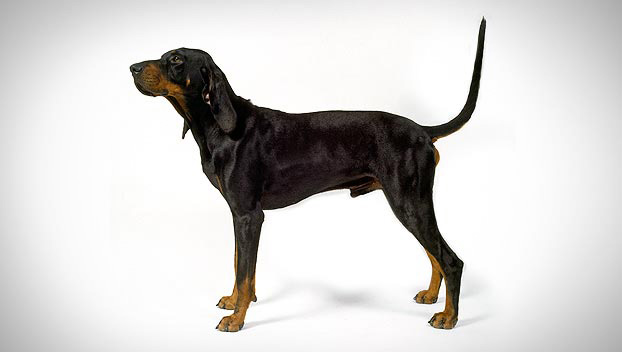
Black and Tan Coonhound

Black and Tan Coonhound


The Black and Tan Coonhound includes a lengthy history dating back early England. Descended in the Bloodhound (that was referred to as St. Hubert Hound) and also the Talbot Hound, the forefathers of today?s Black and Tan were treas-ured as soon as the eleventh century. Within the U . s . States, the Black and Tan was bred for both her distinc-tive color and her capability to search raccoons and opossums. She isn't restricted to small game, however. The breed has additionally been accustomed to trail bigger game, including deer, bears, and mountain lions. The Black and Tan isn't a fast hunter, but rather trails her game as her Bloodhound and Virginia Foxhound forefathers do. She's a deliberate, persistent hunter, giving voice (baying) when her quarry is located (or chased) up a tree.

The Black and Tan is first of all a hunting dog. This breed stands 23 to 27 inches tall in the shoulder, weighing between 50 and 70 pounds, with women slightly more compact than males. They ought to provide the impression of performance, energy, and stamina. This dog is well-muscled though not blocky or heavy they must have the ability to run for hrs. Your eyes are round, brownish, and expres-sive the ears are hanging and, if drawn forward, achieve past the tip from the nose. The coat is dense but thick, in order to be impervious to clean and brambles throughout a search. The coat is black with wealthy tan markings around the muzzle, within the eyes, as well as on the chest area, legs, and toes.

Grooming a Black and Tan is simple. Rapid but dense coat needs two times weekly brushing having a soft bristle brush or curry comb. Although these dogs do shed, mainly early in the year and fall, regular brushing can help keep your losing in check. The breed?s heavy ears require weekly clean-ing, or even more when the dog is outdoors a great deal.

The Black and Tan requires daily exercise. A lengthy walk morning and evening, a run alongside a motorcycle, and an opportunity to chase squirrels within the back-yard could keep most dogs happy. They aren't considered to be retrievers, so fetch isn't a favorite game. Hide-and-seek games are wonderful faves, though. Hide a toy (or among the family kids) and send your Black and Tan after it. Throughout exercise, the Black and Tan should be leashed whatsoever occasions when out-side of the fenced-in yard, because the breed?s hunting instincts are strong. If she catches an aroma, she will disappear, with no quantity of calling brings her back.

Black and Golden skin tone are social creatures, both with individuals along with other dogs. A puppy class with social-ization possibilities with other people along with other young puppies brings the very best in a Black and Tan puppy. Training could be a challenge, however, as Black and Golden skin tone have minds that belongs to them. They're naturally fairly well-socialized but may also be persistent and independent. A puppy class fol-lowed with a fundamental behavior training class is usually a good idea, although motivating this hound to follow along with directions will keep the owner on his toes.

Black and Golden skin tone could be good family dogs they're patient with children and good along with other dogs. They are able to bay and howl, though, which could create problems with neighbors. All interactions along with other small pets ought to be supervised remember, this can be a hunting hound! Major health issues include stylish and elbow dysplasia and thyroid problems.

Registries: AKC, UKC
Occupation:Hunter, trailer
Size: 23 to 27 in tall fifty to seventy pounds
Durability: ten to twelve years
Exercise: Moderate to vigor-ous daily exercise
Training: Challenge never trust off leash
Grooming: Easy