วันอาทิตย์ที่ 2 กุมภาพันธ์ พ.ศ. 2557

Bichon Frise

Bichon Frise


These adorable whitened fluffy dogs came from within the Mediterranean parts of Italia, The country, and also the Canary Islands. Descended in the Barnet (or water spaniel), these were frequently known as Barbichon, that was reduced to Bichon, and then were known as Bichon Teneriffe. The breed?s small size, happy personality, and appealing coat made the dogs wonderful buddies. Within the 1300s, mariners introduced the dogs aboard ships as buddies so that as barter for other goods at stops. With them as barter spread the dogs? recognition through the Mediterranean and into Europe. Within the 1500s, Henry III was keen on the breed, as was Napoleon III.

The Bichon Frise stands between 9.5 and 11.5 inches tall and weighs in at between 10 and 16 pounds, with women more compact than males. Your eyes are dark and significant, the tail is transported happily within the back, and also the whitened fluffy coat draws your hands?you simply must touch it. Even though the Bichon is really a small dog, she's sturdy, having a strong little body. At some point throughout the breed?s history, within the late 1800s, she was referred to as cir-cus dog or organ grinder?s dog and danced and carried out methods for that amusement of viewers. Bichons today still retain individuals sports capabilities.

The breed?s fluffy whitened coat is extremely appealing but does need regular grooming to help keep it fit. When the coat is overlooked, it'll pad (tangle). If matting isn't taken proper care of immediately, the whole coat turn into matted, needing an expert groomer?s services to shave your dog. Therefore, the coat ought to be blown and combed daily. Even though the Bichon?s coat doesn't shed, it will grow constantly and needs trimming. If you want to trim your Bichon yourself, speak to your dog?s breeder for guidance. Most Bichon proprietors look for a professional groomer you never know the breed after which bring their dogs set for grooming every 4 to 6 days.

The Bichon exercise needs aren't extreme. Older young puppies and youthful adult dogs would be the most active, but a great walk morning and evening with a game title of catch at midday could keep many of them happy. Bichons do enjoy playing, will always be available to challenging, and also have took part in obe-dience competitions, agility, and flyball.

Early socialization is essential for those Bichons. Even though the breed is, typically, happy and extroverted, some young puppies can be very reserved. With socialization, even these young puppies can discover the planet can be a wonderful place. Training is essential too this can be a vibrant breed, and when not trained, they are able to easily train their proprietors to complete precisely what they want. Housetraining could be a challenge generate a routine, make use of a crate, watch your dog carefully, and become patient and consistent.

Bichons are alert watchdogs, woofing when anybody approaches the home. With family and buddies, they're very affectionate and playful. Even though they are sturdy, possess a happy tempera-ment, and revel in children, they may be not big enough for rough childhood play. They're good along with other pets, although inter-actions with small creatures ought to be supervised. Primary health issues include knee problems, eye disorders, and allergic reactions.

Registries: AKC, UKC, CKC
Occupation:Companion
Size: 9.5 to 11.5 in tall 10 to16 pounds
Durability: 13 to fifteen years
Exercise: Low level of activity
Training: Simple to behavior training
train challenge to housetrain
Grooming: Difficult

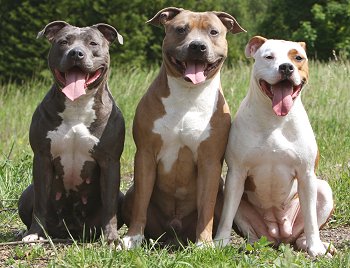
American Pit Bull Terrier

American Pit Bull Terrier


Bloodstream sports (pitting your dog against bulls or bears) were extremely popular in ancient Britain. These sports provided entertainment for the working class and royalty, and dogs who fought against well were treasured. Bloodstream sports were outlawed in England in 1835, but illegal dog fighting ongoing in yards, cellars, and also the back rooms of pubs. Today?s American Dog Terrier, or APBT, is most likely descended in the bulldog and terrier crosses utilized in these fights.

Your dog that coded in America within the 17th and 18th centuries would be a bigger dog settlers needed a bigger, more effective dog to safeguard their homesteads. Although illegal dog fighting has ongoing, using the APBT and APBT crosses at the time from it, APBTs also have found a house within the hearts of numerous proprietors as courageous yet gentle buddies. An APBT is really a medium-sized dog whose muscular build

makes him appear bigger than he really is. Men're nor-mally between 18 and 22 inches tall in the shoulder and between 40 and 60 pounds, with women slightly more compact.

The mind is blocky with strong, muscular jaws, round eyes, and only popped ears or natural half-pricked ears. The is strongly muscled, giving the look of great strength. The coat is brief and it is stiff to touch, but shiny and glossy. APBTs could be any color.

Grooming an APBT is simple rapid coat could be blown a couple of times per week having a bristle brush or curry comb. APBTs require daily exercise. A lengthy, brisk walk is nice, out of the box a session of weight tugging, a game title of retrieve, or perhaps a ses-sion around the agility course. Although APBTs can run, and may run quite rapidly, they don't have your body build of the lengthy-distance runner, so their exercise shouldn't be focused on that kind of activity. To avoid your dog from running off and also to make certain issues with other dogs don't occur, all exercise ought to be inside a fenced-in yard, or even the dog ought to be on leash.

The ancestry of APBTs includes dogs who have been bred to battle, frequently along with other dogs. Therefore, not every APBTs could be social with dogs outdoors that belongs to them family. However, if APBT young puppies are socialized well to young puppies of other breeds, dimensions, and colours, they frequently can learn how to enjoy other dogs? company and learn how to play nicely. All APBTs should be supervised when getting together with other dogs, though, and individuals that demonstrate aggression should no more be permitted to socialize. Training should take part in every APBT?s upbringing, not must be effective breed similar to this must learn guy-ners, but since the breed is vibrant and likes learning. Working out ought to be firm yet fair, and a lot of fun. APBTs are fantastic watchdogs. Using the bulk to face behind their bark, they may be quite imposing. However, to their loved ones, APBTs are gentle, affectionate, and silly clowns.

They enjoy being the middle of attention. They're also very tol-erant of youngsters and take roughhousing well. When elevated along with other pets, they may be very gentle and patient, although inter-action along with other creatures ought to always be supervised. ,APBTs can are afflicted by allergic reactions, and stylish dysplasia can generate problems. Incorrect, excessively aggressive, or excessively fearful temperaments would be the greatest problem inside the breed today.

Registries: UKC, ARBA Occupation:Fighter, protector, companion
Size: 18 to 22 in tall 35 to 60 pounds
Durability: 11 to 13 years
Exercise: Moderate
Training: Easy difficult to keep focused
Grooming: Easy

American Hairless Terrier (Toy and Miniature)

American Hairless Terrier (Toy and Miniature)


In early seventies, a hairless puppy was created inside a lit-ter of Rat Terrier young puppies. That puppy was the foundation from the American Hairless Terrier (AHT) breed. Actually, for several years, the breed was referred to as Rat Terrier?Hairless Variety. In The month of january, 2004, the breed was re-named.

The breed has two dimensions: toy and miniature. The toys are 7.5 to 11 inches tall and weigh between 4 and eight pounds. The miniatures are 11.5 to 16 inches tall and weigh between 8.5 to 16 pounds. Both in dimensions, the dogs strongly retain their Rat Terrier heritage and search. They're well-balanced and muscular. Although young puppies are born with short, fuzzy hair, by 8 days old, they've dropped it. Their skin is soft, smooth, and warm. They've freckles or spots of black, brown, or red-colored.

Grooming is extremely easy. Your skin could be cleaned having a moist rag. They are able to sunburn so they ought to be protected against too much exposure to the sun.

This can be a high-energy breed. They might opt for a lengthy walk morning and evening and can enjoy several games of catch and fetch. As suitable for their terrier heritage, additionally they enjoy looking for small creatures outside. They stand out at agility training.

This breed needs early socialization, because these dogs could be cautious about other people. Early training is really a plus, as AHTs possess a quick, vibrant mind and when you don?t set some rules, they'll. After fundamental behavior training, have a great time. AHTs love trick training. AHTs are devoted and dependable for their family. They're active and could be great with older kids who respect them and aren't too rough. They may be good along with other dogs, although have fun with bigger dogs ought to be super-vised. They aren't always beneficial with more compact pets. Health issues include knee problems, stylish and elbow dysplasia, and allergic reactions. The little gene pool within the breed


Registries: UKC, AHT clubs Occupation:Companion
Size: Toy: 7.5 to 11 in tall 4 to eight pounds
Small: 11.5 to 16 in tall 8.5 to 16 pounds
Durability: 12 to 14 years
Exercise: Active dog
Training: Easy
Grooming: Easy

American Foxhound

American Foxhound


Foxhounds were introduced towards the American colonies from England within the mid-1600s. The dogs known today as American Foxhounds descend from individuals dogs and from others imported from England, Ireland, and France. The American Foxhound is identified by both AKC and UKC, however, many foxhounds aren't reg-istered with either and might be blends of other foxhounds. Many predators just need a foxhound who'll search inside a specific way or who are able to handle certain terrain or conditions. Claudia Bazinet, of Foxhound Moving and Retirement, states, ?There are about 24 strains of yankee Foxhounds, plus they vary broadly in type.? She continues, ?The American Foxhound was bred in the British Foxhound but includes a medium build and it is faster. There is a shorter neck and longer legs. The American Foxhound has longer ears, however, that may vary based on the strain.? Typically, American Foxhounds stand between 21 and 25 inches tall and weigh between 40 and 70 pounds. The coat is brief and could be any color but is frequently the normal hound whitened and red-colored or rust having a black saddle or cape.

Grooming this Foxhound is simple simply brush him having a soft bristle brush or curry comb a few occasions per week to release the dead fur. Foxhounds need daily aerobic fitness exercise. Most not play catch or fetch games, so a lengthy, energetic walk or perhaps a jog beside a bicycle is going to be needed. Do not allow a Foxhound to operate off leash outdoors of the fenced yard like a hunter, if your rabbit or any other animal is flushed, he'll be gone with no quantity of calling brings him back.

Although American Foxhounds could be stored as pets and could be quite calm and delicate in the home, the breed is first of all a hunter. Training could be a challenge. They're good along with other dogs (even though they will not be reliable with small pets) and could be quite loving toward children?s antics. They are doing bay and could cause neighborhood complaints. Health disadvantage-cerns include ear problems.


Registries: AKC, UKC, CKC Occupation:Hunter
Size: 21 to 25 in tall 40 to 70 pounds
Durability: ten to twelve years
Exercise: Daily aerobic fitness exercise
Training: Challenge
Grooming: Easy